
Most people know that regular movement supports healthy glucose regulation. However, a study from the University of Houston attracted considerable attention by suggesting that activating one small muscle in the calf could substantially influence the body’s response to glucose, even while sitting.
The muscle is called the soleus. It lies beneath the larger calf muscle and is particularly rich in slow-twitch muscle fibres. These fibres contain many mitochondria and are designed to remain active for long periods without becoming easily fatigued.
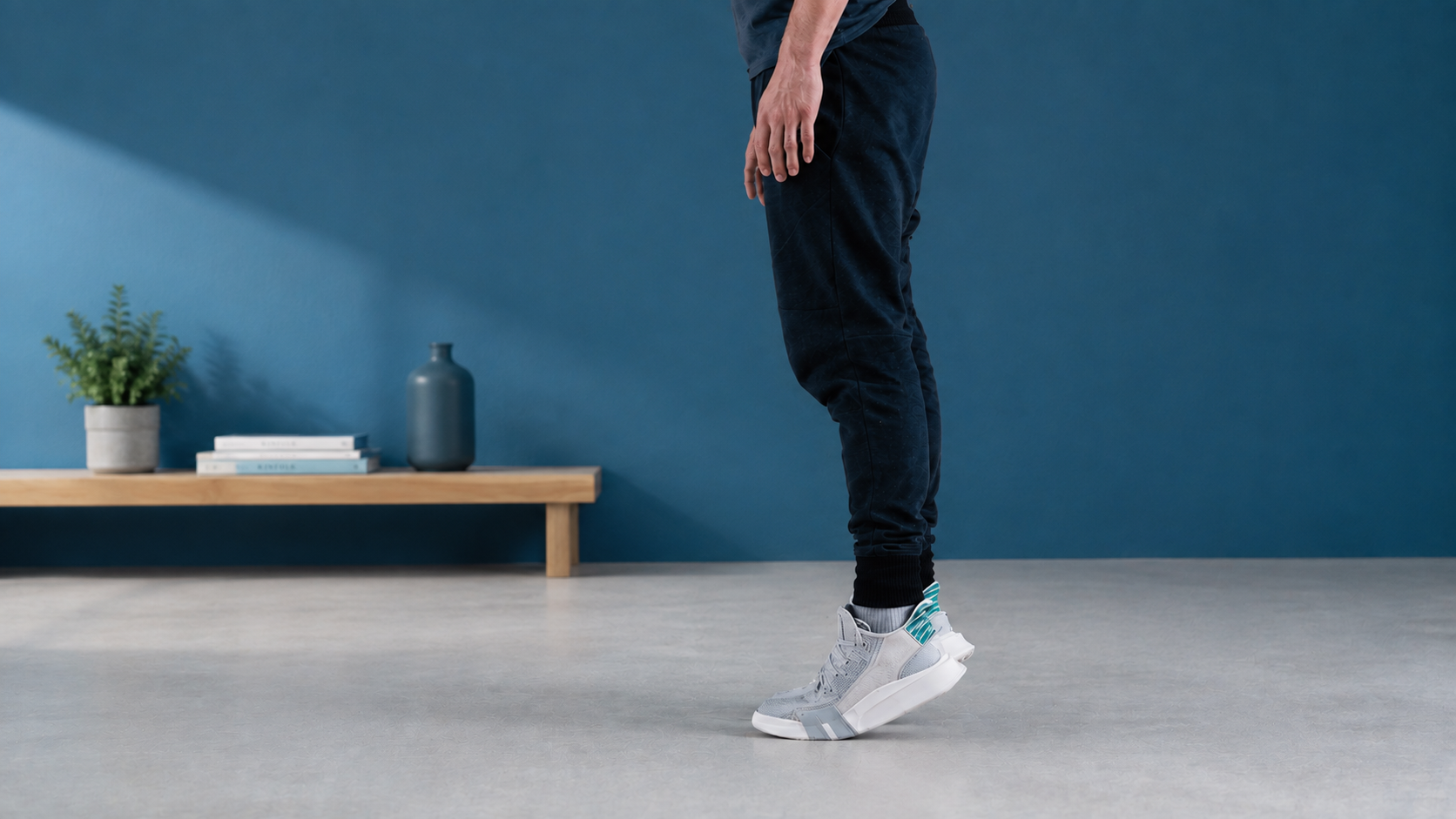
Researchers developed a specific seated movement called the soleus push-up to explore whether sustained activation of this muscle could increase glucose and fat oxidation.
What did the soleus study investigate?
The 2022 study, published in iScience, included two small crossover experiments. Each participant completed an inactive sitting condition and a condition involving sustained soleus contractions, allowing their metabolic responses to be compared.
During the glucose experiment, participants consumed a drink containing 75 g of glucose. Blood glucose and insulin were then measured over the following three hours.
Compared with inactive sitting, the soleus push-up intervention was associated with:
- Up to 52% lower postprandial glucose excursion
- Up to 60% lower incremental insulin response
- Increased whole-body carbohydrate oxidation
- Increased use of circulating glucose and fat
- Very little reliance on the soleus muscle’s stored glycogen
These findings demonstrate the metabolic potential of sustained muscle contraction. However, the study protocol is important when interpreting the results.
This was not a short set of seated heel raises
The participants did not simply perform 10 or 20 soleus push-ups and then remain seated. They continued the contractions throughout the entire three-hour glucose test.
The activity was carefully controlled using electromyography and measurements of oxygen consumption. This helped the researchers ensure that the soleus was activated at the intended intensity.
A separate part of the study examined approximately 4.5 hours of accumulated soleus contractions during a longer laboratory day.
The frequently quoted reductions of 52% in glucose excursion and 60% in the insulin response therefore came from a prolonged and highly controlled intervention. It cannot be assumed that performing a few casual seated heel raises will produce comparable results.
Why could the soleus remain active for so long?
The soleus contains a high proportion of slow-twitch oxidative fibres. Unlike muscles designed primarily for short, powerful movements, the soleus is adapted to sustained activity and postural support.
During the studied movement, the soleus used relatively little of its stored glycogen. Instead, it increased its use of circulating fuels, including glucose and fat. This may help explain why the participants were able to continue the contractions without substantial muscle fatigue.
The study therefore provides an interesting demonstration of an important physiological principle: active muscles use more circulating glucose than inactive muscles.
Is a short walk after eating a better practical choice?
For everyday life, a 10–15-minute walk after a meal is probably the more practical and better-supported recommendation.
Walking activates a much larger muscle mass than a seated soleus push-up, including muscles in the calves, thighs and hips. As these muscles contract, they increase their demand for energy and can take up more glucose from the circulation.
Research supports the benefits of moving soon after eating. A systematic review and meta-analysis found that post-meal physical activity reduced glucose excursions more effectively than exercising before a meal. Beginning the activity relatively soon after eating appeared particularly helpful. Read the systematic review.
Randomised crossover research has also found that walking for 10 minutes after each main meal supported post-meal glucose regulation more effectively than completing one 30-minute walk at an unspecified time of day. Read the study.
Other research has shown benefits from three 15-minute walks after meals, demonstrating that activity does not need to be lengthy or strenuous to support healthy glucose handling. Read the study.
A simple post-meal routine
When possible, take a comfortable 10–15-minute walk shortly after eating. The pace does not need to be strenuous. The aim is simply to activate the large muscles of the legs while glucose from the meal is entering the circulation.
When walking is not practical, alternatives may include:
- 10–20 comfortable bodyweight squats
- Chair squats or repeated sit-to-stand movements
- Gentle stair climbing
- Standing and moving around the room
- Seated calf and soleus movements during unavoidable periods of sitting
The precise effect will vary according to the meal, the duration and intensity of the activity, and the individual’s metabolic response.
The practical message
The soleus study offers fascinating insight into how sustained activity in a small oxidative muscle can influence whole-body glucose and fat metabolism. However, the intervention required several hours of carefully monitored contractions and is not directly comparable with performing an occasional set of seated heel raises.
For most people, the most realistic evidence-based message is much simpler:
After a meal, move. When possible, take a 10–15-minute walk.
A short post-meal walk is accessible, activates several large muscle groups and is supported by a broader body of research. Soleus push-ups may still be useful during meetings, desk work, travel or other situations where walking is not possible, but they are best viewed as an additional way to reduce muscular inactivity—not as a replacement for walking or regular exercise.
Reference
- Hamilton MT, Hamilton DG, Zderic TW. A potent physiological method to magnify and sustain soleus oxidative metabolism improves glucose and lipid regulation. iScience. 2022;25(9):104869.
- Engeroff, T., Groneberg, D.A. & Wilke, J. After Dinner Rest a While, After Supper Walk a Mile? A Systematic Review with Meta-analysis on the Acute Postprandial Glycemic Response to Exercise Before and After Meal Ingestion in Healthy Subjects and Patients with Impaired Glucose Tolerance. Sports Med 53, 849–869 (2023).
This article is provided for educational and informational purposes only. It is not intended for diagnosis, screening or clinical decision-making.
Discover more
Soleus Push-Ups or Walking After Meals?
Most people know that regular movement supports healthy glucose regulation. However, a study from the University of Houston attracted considerable attention by suggesting that activating one small muscle in the calf could substantially influence the body’s response to glucose, even while sitting. The muscle is called the soleus. It lies beneath the larger calf muscle and is particularly rich in slow-twitch muscle fibres. These fibres contain many mitochondria and are designed to remain active fo


The Health Benefits of Having a Dog: Microbiome, Mood & Movement
Discover how having a dog naturally supports microbiome diversity, mental wellbeing, and daily physical activity, backed by research and aligned with a health-optimisation lifestyle.

Coffee, Cortisol Rhythms & Genetic Metabolism: A Scientific Overview
Coffee contains more than 1,000 bioactive compounds, including caffeine, trigonelline, diterpenes, melanoidins, and various polyphenols. These compounds influence alertness, metabolic activity, vascular tone, and antioxidant capacity. Increasing evidence suggests that both timing of consumption and genetic variability in caffeine metabolism shape the overall physiological response.
Ready to grow your practice?
Sign up today and access all tools, education, and resources in one platform.

All‑in‑one functional medicine platform for education, testing, and patient care.
Nordic Laboratories ApS
Simply Nature Ltd
Stonegate East Sussex TN5 7DU,
United Kingdom