
Have you ever noticed your digestion change during a demanding week? Perhaps your appetite shifts, your stomach feels unsettled, or meals sit differently. These changes reflect a close conversation between your brain and your gut.
That conversation runs in both directions. Stress can influence the gut environment, while signals from the gut help shape how the body responds to stress. Understanding this connection gives us more ways to support resilience, through what we eat, how we rest, and the pauses we build into our day.

Your gut responds to your day
When the brain perceives a challenge, it activates the sympathetic nervous system and the hypothalamic–pituitary–adrenal axis, also called the HPA axis. Together, these systems help mobilise energy and increase alertness. The HPA axis also stimulates the release of cortisol.
Cortisol has an essential role in healthy physiology. It helps regulate energy availability and immune activity, and normally follows a daily rhythm. A healthy stress response includes both activation and recovery: rising to meet a challenge, then settling afterwards.
During stressful periods, the body can change digestive movement, secretion and sensitivity. Stress signals also influence the gut's immune environment and the conditions in which microbes live. This helps explain why digestion can feel different even when your food has stayed the same.
The gut barrier: a carefully managed boundary
The intestinal lining allows nutrients and water to pass into the body while helping control contact with microbes and their products. Mucus, immune cells and connections between neighbouring intestinal cells all contribute to this selective barrier.
Stress can influence how this boundary functions. In a study of healthy volunteers, a public-speaking challenge increased small-intestinal permeability in participants who showed a marked cortisol response. The researchers also identified a role for corticotropin-releasing hormone, or CRH, and mast cells, which are immune cells in the gut.
This is a broader stress-signalling process than cortisol acting alone. The microbiome, intestinal lining and immune system work together, making gut resilience an important part of the picture.
How the gut can send stress signals back
One of the substances involved in gut–immune communication is lipopolysaccharide, or LPS, a component of the outer membrane of certain bacteria. The intestinal barrier normally helps limit its passage into circulation.
When more bacterial material crosses that boundary, it can activate immune signalling. This may include the release of interleukin-6 (IL-6), one of the body's immune messenger molecules. These messages can communicate with the brain and influence the HPA axis. LPS does not need to enter the brain directly for immune signals to affect brain function.
Human experiments using small, controlled doses of endotoxin have demonstrated increases in IL-6, ACTH and cortisol. These experiments show that immune activation can stimulate the stress system; they do not establish that the same sequence occurs to the same extent during everyday stress.
Together, these findings help explain a possible feedback loop: stress influences the gut, gut-derived immune signals feed back to the stress system, and recovery may become more difficult. It is a potential contributor to sustained alertness, rather than an inevitable cycle. Prolonged stress can also alter cortisol rhythms without keeping cortisol constantly high.
Gut microbes also interact with stress hormones
Some gut bacteria can break down cortisol and other steroid hormones that reach the intestine, producing compounds that may influence processes elsewhere in the body. This microbial activity forms part of hormone metabolism, alongside the work of the liver and kidneys.
An emerging research finding connects certain microbial steroid metabolites with the kidneys' management of sodium and potassium. An enzyme called 11ß-HSD2 normally converts cortisol into cortisone, protecting mineralocorticoid receptors from cortisol activation. Laboratory research suggests that some microbe-derived steroid metabolites can inhibit this enzyme. This could cause the kidneys to retain more sodium and water and excrete more potassium. The extra fluid in circulation could then contribute to higher blood pressure
This is an intriguing biochemical connection. Its contribution to everyday psychological stress in humans is still being established, so it is best understood as an emerging pathway rather than a routine sequence in which cortisol is “dumped” into the gut.
Give your gut and nervous system room to recover
Supporting this relationship starts with achievable daily habits. You can work on several parts of the conversation at once.
Make meals a moment to pause. Sit down when possible, put your phone aside and take a few slow, comfortable breaths before eating. Give yourself time to chew and notice your food. A meal can become a useful opportunity to step away from the day's demands.
Nourish your microbial community. Include a variety of vegetables, fruit, oats, legumes, nuts and seeds according to your tolerance. Gut microbes ferment certain fibres into short-chain fatty acids, including butyrate, which helps nourish cells in the colon.
Bring colour and polyphenols to the table. Berries, extra virgin olive oil, herbs, tea and cocoa provide plant compounds that interact with the gut microbiome. Simple additions could be berries with breakfast, olive oil over vegetables, or herbs in a soup.
Explore fermented foods if they suit you. Live-culture yoghurt, kefir and fermented vegetables can add variety. In a small study of healthy adults, a diet rich in fermented foods increased microbial diversity and reduced several inflammatory markers. Start with foods and portions you enjoy and tolerate.
Create regular opportunities to settle. A short walk, gentle movement, a quiet evening routine or time with someone you feel comfortable around can make recovery part of daily life. Protect a consistent sleep schedule and notice whether late caffeine makes it harder to unwind.
Choose one place to begin: a calmer lunch, an extra plant food, or ten minutes outside after work. These are manageable ways to give both your gut and your nervous system more room in the day. You do not need a perfectly stress-free life to build habits that support wellbeing.
Would you like us to help you find a practitioner? Learn more about our clinics
References
- Vanuytsel T, et al. Psychological stress and corticotropin-releasing hormone increase intestinal permeability in humans by a mast cell-dependent mechanism. Gut. 2014;63(8):1293–1299.
- Stressed to the Core: Inflammation and Intestinal Permeability Link Stress-Related Gut Microbiota Shifts to Mental Health Outcomes. Biological Psychiatry. 2024.
- Schreiber W, et al. Endotoxin- and corticotropin-releasing hormone-induced release of ACTH and cortisol. A comparative study in men. Neuroendocrinology. 1993;58(1):123–128.
- Moser SO, et al. Inhibition of 11ß-Hydroxysteroid Dehydrogenase 2 by a Gut Microbiome Derived Metabolite. Journal of the Endocrine Society. 2024;8(Supplement 1):bvae163.1815. Conference abstract; laboratory study.
- Wastyk HC, et al. Gut-microbiota-targeted diets modulate human immune status. Cell. 2021;184(16):4137–4153.e14.
Discover more

When stress reaches your gut
Stress can influence the gut environment, while signals from the gut help shape how the body responds to stress. Understanding this connection gives us more ways to support resilience, through what we eat, how we rest, and the pauses we build into our day.


Hydration: Supporting Focus, Energy and Cognitive Performance
Nutrition, sleep and physical activity are well-established foundations for cognitive performance. But there is another simple factor that is easy to overlook: hydration.
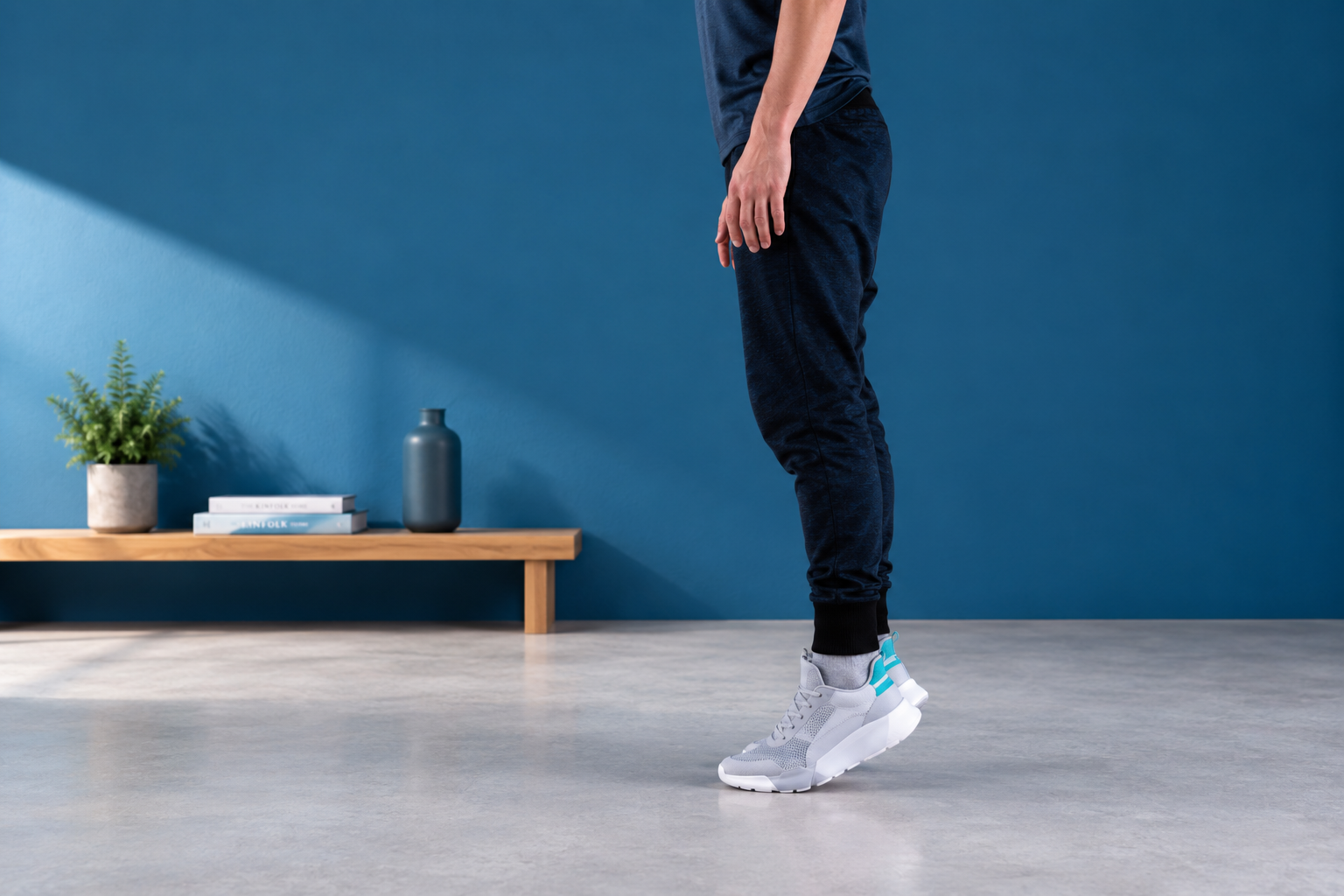
Soleus Push-Ups or Walking After Meals?
Most people know that regular movement supports healthy glucose regulation. However, a study from the University of Houston attracted considerable attention by suggesting that activating one small muscle in the calf could substantially influence the body’s response to glucose, even while sitting. The muscle is called the soleus.
Ready to grow your practice?
Sign up today and access all tools, education, and resources in one platform.

All‑in‑one functional medicine platform for education, testing, and patient care.
Nordic Laboratories ApS
Simply Nature Ltd
Stonegate East Sussex TN5 7DU,
United Kingdom